
Skip to content
ReFED logo
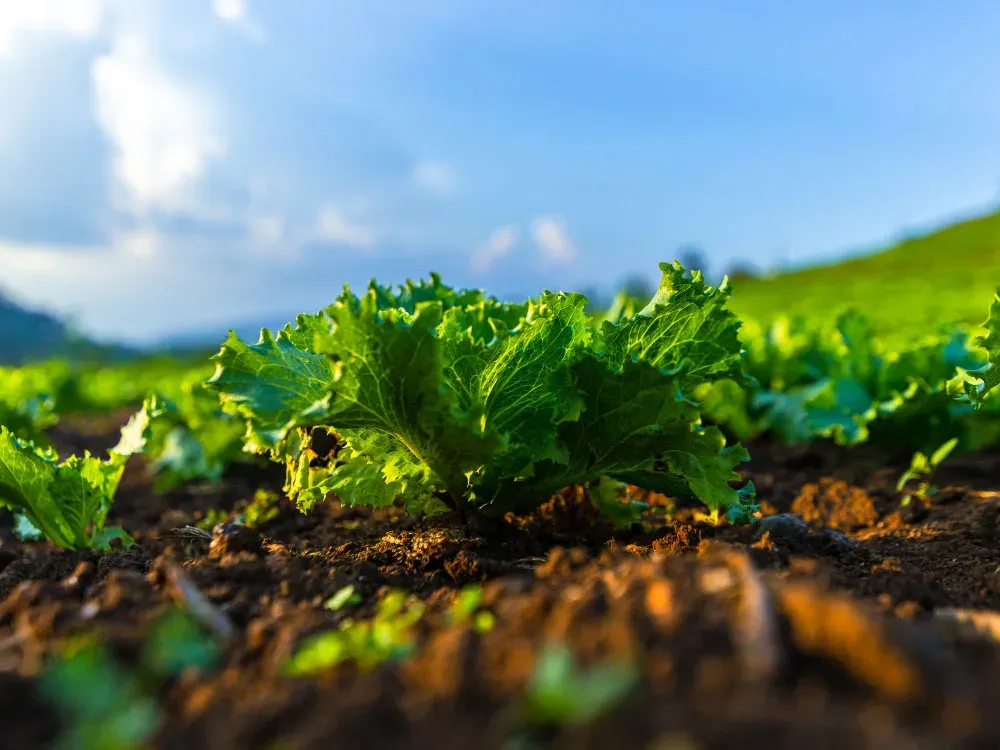
A head of lettuce growing in a field under a blue sky

"Optimize the Harvest" - Following the Roadmap to 2030 Webinar Series

Past Event

Wednesday, June 2, 2021 1:00 pm – 2:00 pm EDT

Location

Virtual

More than a quarter of surplus produce left behind after harvest is considered edible but “not marketable” – frequently because of overly strict quality or appearance standards. Another quarter is actually considered marketable, but it isn’t harvested for other reasons. What solutions can help producers avoid overproduction and harvest as much as possible of what’s grown?

Panelists

  • Derek Azevedo

    Executive Vice President

  • Lisa K. Johnson, Ph.D

    Independent Food & Agriculture Consultant

  • Madeline Rotman

    Head of Sustainability

Key Takeaways

Derek

"The chain we’re talking about here … isn’t farm to consumer with a truck that goes back and forth between them. The chain we’re talking about - that messy middle of the food supply – is vast. And so in order for us to really, genuinely optimize the good, healthy, nutritious crops we grow, every stakeholder in that chain needs to play a role."

Lisa

"There’s so many reasons why a grower plants the amount of food they plant, including the number of customers they had the year before, the opportunity for a market to pop up out of nowhere that they want to serve, even the lack of really effective crop insurance for fruit and vegetable producers. It really creates a situation where they have to back themselves up against risk."

Madeline

"When we can optimize that first harvest – through new specs, through new channels, through new market avenues – we actually give back from a resource perspective to the farm being able to pick more, and truckers, and every piece along the path. If we can take everything at that moment of harvest along the whole chain, we get to give back and create new market revenues."

Derek

"We don’t have unskilled labor on the farm – the people cutting watermelons are among the most skilled artisans in their craft that we employ. And the efficiency and speed at which they can capture that fruit and do it in a cost-effective way is a missed opportunity if you don’t loop them in as part of the solution."

Lisa

"When we measure, we can manage. And this is the mantra among food waste enthusiasts for so long. When we know what we’re dealing with – the scale of what we’re dealing with – we can design a solution that fits at that scale."

Madeline

"Making the assumption that there’s excess food, and there’s so many folks in need of eating, so [donating it] is a silver bullet, is just not true, because the infrastructure needs across the supply chain – as well as the infrastructure of the food access partners – there’s so many steps along the way that also need to be optimized.”

Derek

"I don’t need to sell my cantaloupes at top dollar, if I’m selling 80, 90, 100% of them. I can sell them at a discount if more of them are moving, which puts more cost-effective nutrition into the supply chain… Having the opportunity to build a bigger pie to share is a really smart angle."

Lisa

"Would produce of lesser quality appearance sitting right next to the high quality appearing produce in the grocery store cannibalize those sales? I think we would see something radically different than what we expect. I would hope that it would create a brand new group of consumers who are eating produce for the first time, who were not able to afford it previously, and suddenly now have access to it at a lower price point… I feel like if government agencies would really treat food loss and food waste as a crisis of public health, then you know we could get somewhere with it."

In This Series

Packs of rice cakes moving along a conveyor belt in a factory

"Enhance Product Distribution" - Following the Roadmap to 2030 Webinar Series

Learn More : "Enhance Product Distribution" - Following the Roadmap to 2030 Webinar Series
Crusty bread rolls and loaves stacked in wire baskets

"Refine Product Management" - Following the Roadmap to 2030 Webinar Series

Learn More : "Refine Product Management" - Following the Roadmap to 2030 Webinar Series
Food scraps of eggshells, lemon, avocado peel and vegetable trimmings on a wooden table

"Maximize Product Utilization" - Following the Roadmap to 2030 Webinar Series

Learn More : "Maximize Product Utilization" - Following the Roadmap to 2030 Webinar Series
A shopper beside the broccoli display with a cart holding milk, oranges and peppers

"Reshape Consumer Environments" - Following the Roadmap to 2030 Webinar Series

Learn More : "Reshape Consumer Environments" - Following the Roadmap to 2030 Webinar Series
A worker in blue gloves carrying a crate of mangoes through a produce packing warehouse

"Strengthen Food Rescue" - Following the Roadmap to 2030 Webinar Series

Learn More : "Strengthen Food Rescue" - Following the Roadmap to 2030 Webinar Series
A white scoop of brown feed pellets over a terracotta bowl

"Recycle Anything Remaining" - Following the Roadmap to 2030 Webinar Series

Learn More : "Recycle Anything Remaining" - Following the Roadmap to 2030 Webinar Series

Browse Past Events

A donation box of apples, canned goods, dry pasta, buckwheat and bottled water

Rethinking Food Rescue: Exploring Consolidation & Collaboration to Scale Impact [ReFED Learning Labs]

Learn More : Rethinking Food Rescue: Exploring Consolidation & Collaboration to Scale Impact [ReFED Learning Labs]
Green crates filled with ripening tomatoes

Progress on the Plate: A Conversation about the 2026 U.S. Food Waste Report

Learn More : Progress on the Plate: A Conversation about the 2026 U.S. Food Waste Report
A diner cutting into a plate of grilled fish with small bowls of salad

What Will It Take To Solve Food Waste? A Special Conversation with Andrew Zimmern

Learn More : What Will It Take To Solve Food Waste? A Special Conversation with Andrew Zimmern
Strawberries ripening on raised growing beds inside a greenhouse

Emerging Trends in Food Waste Innovation [ReFED Learning Labs]

Learn More : Emerging Trends in Food Waste Innovation [ReFED Learning Labs]
A plate of fried eggs, sliced ham, toast, peas, tomatoes, almonds and sweet potato chips

More (or Less) for Your Money? The Case for Customizable Portions at Restaurants

Learn More : More (or Less) for Your Money? The Case for Customizable Portions at Restaurants
A plate of vegetable fried rice with broccoli, corn and scallions beside a fork

Mystery Basket Dinners [Homemade and ReFED Series]

Learn More : Mystery Basket Dinners [Homemade and ReFED Series]
Overhead view of people sharing a holiday table of roast chicken, roasted vegetables and salads

Sleigh Food Waste This Holiday Season: A Low-Waste Cooking Demo with Jon Kung

Learn More : Sleigh Food Waste This Holiday Season: A Low-Waste Cooking Demo with Jon Kung
Cupped hands holding a pile of fresh strawberries

Bridge Financing: Fast and Flexible Capital to Keep Impact Moving

Learn More : Bridge Financing: Fast and Flexible Capital to Keep Impact Moving
Floury hands breaking open a loaf of seeded bread

Catalytic Capital Intermediation: Connecting Mission-Driven Capital to Systemic Change

Learn More : Catalytic Capital Intermediation: Connecting Mission-Driven Capital to Systemic Change
Derek Azevedo

Derek Azevedo

Executive Vice President – Bowles Farming Company

Bowles Farming Co. is a 6th generation, 160-year-old, 12,000-acre diversified farm striving to produce food and fiber in the most ethical and sustainable ways possible in rural Los Banos, California. Crops on the farm include cotton and tomatoes primarily, but Bowles also grows a host of specialty crops ranging from herbs, and root vegetables, mixed melons, and grain crops utilizing both conventional, and organic practices. Derek's roles on the farm involve strategic crop planning, contract negotiations, and oversight of all operations, and special projects, including on-farm composting, habitat restoration, and trial partnerships. Prior to joining the Bowles' team, Derek spent 12 years in the food processing industry working with farmers throughout the San Joaquin Valley, coordinating the purchase and delivery of raw fruit and farm services. Derek is a graduate of Kansas State University, the California Ag Leadership class 45, and currently resides in Gustine, California.

Lisa K. Johnson, Ph.D

Lisa K. Johnson, Ph.D

Independent Food & Agriculture Consultant – Lisa K. Johnson Consulting

Lisa K. Johnson, Ph.D., is a leader in on-farm food loss research in the US. Her current projects focus on in-field measurement, and estimation and analysis of food loss, all in fruit and vegetable crops. She is a strategic and research partner to World Wildlife Fund, US Environmental Protection Agency, Society of St. Andrew, Boston Area Gleaners, Tennessee Department of Environment & Conservation, and the Consortium for Innovation in Postharvest Loss and Food Waste Reduction. Working closely with nonprofits and consortia, including World Resources Institute, Commission for Environmental Cooperation, and Stewardship Index for Specialty Crops, she has helped to provide technical assistance and protocols for reducing food loss on farms. Dr. Johnson engages students several times a year, serving academia as Adjunct Faculty at North Carolina State University, in the Department of Horticultural Science, and she is based in Raleigh, NC. She also serves the produce industry as an Independent Consultant and as Senior Director of Strategic Planning & Communications at InSight Labs, a quality control food tech startup. In addition, she is a part of the Expert Network for ReFED and consultant networks AgTech Insight, IMPACTR, and Globalwonks.

Madeline Rotman

Madeline Rotman

Head of Sustainability – Imperfect Foods

Madeline is the Head of Sustainability at Imperfect Foods, the online grocer on a mission to eliminate food waste and build a better food system for everyone. With 10+ years of experience in the grocery sector, Madeline has been a champion of food access and the need to build more equitable and regenerative food systems. In this role, she is helping the company reduce waste even further across their operational practices and food supply system at large.

The Latest Food Waste News—Straight to Your Inbox

Subscribe to Our Mailing List

Stay on top of what’s happening in the fight against food waste—plus be the first to find out about ReFED news, events, funding opportunities, and more.

Loading the signup form…